
Every exam season, parents ask me the same question: “How many marks does my child need for an A*?” The honest answer is that nobody knows in advance, not even the examiners. But that does not mean you are in the dark. Cambridge publishes grade thresholds after every exam series, and learning to read them is one of the most useful things a student or parent can do.
Grade thresholds turn vague goals like “get an A” into concrete numbers you can track in every practice paper.
What a Grade Threshold Is
A grade threshold is the minimum total mark needed for each grade in a particular exam series. If the A threshold for a syllabus is 150 out of 200, a student with 150 or more gets an A, and a student with 149 gets a B.
The important point is that thresholds are set after the exam is marked. Senior examiners look at how difficult the papers turned out to be and set thresholds so that grades represent the same standard every year. A harder paper usually means lower thresholds; an easier paper means higher ones.
Why Thresholds Change Every Series
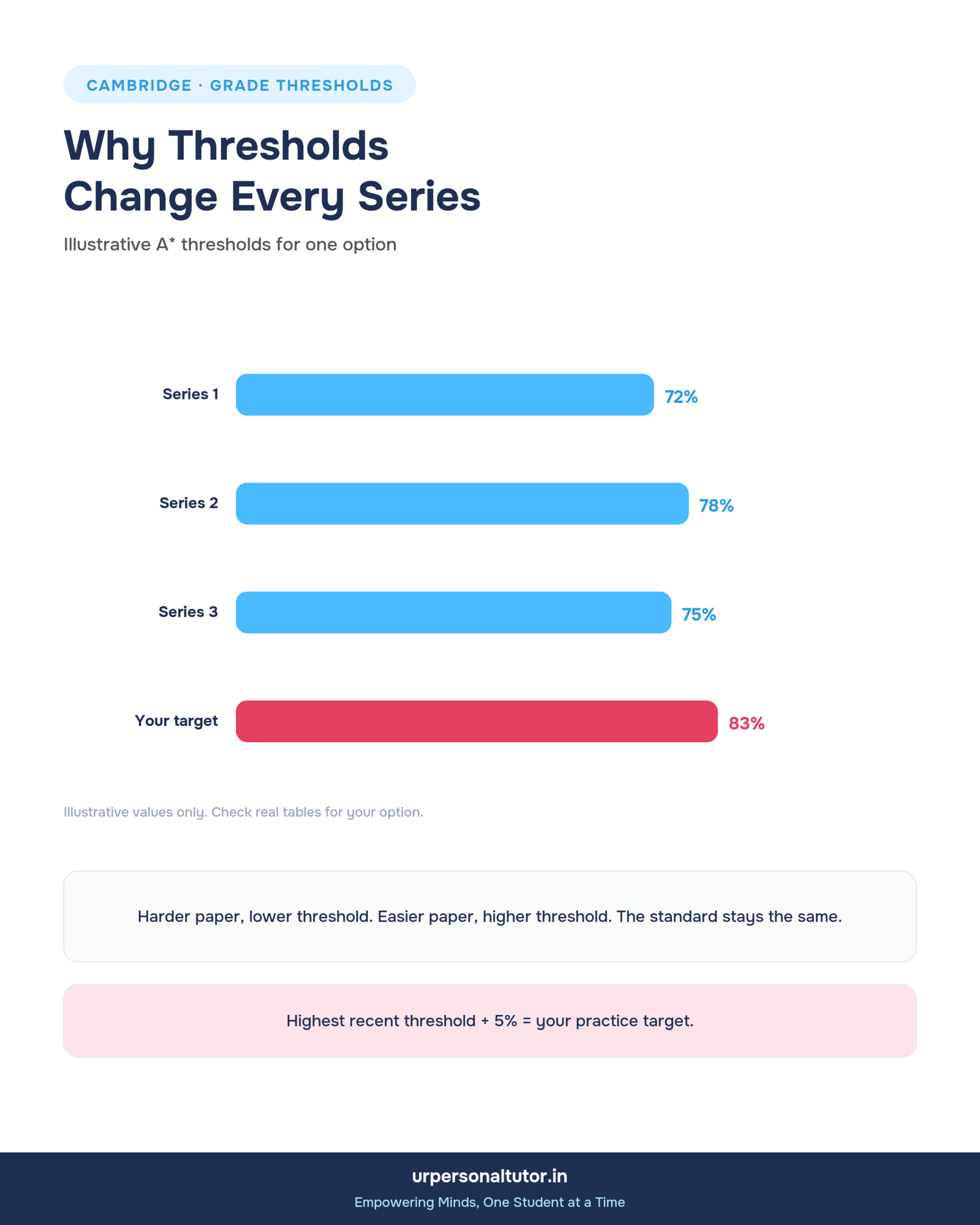
Students are often confused when an A needed 70 percent one year and 64 percent the next. That is the system working as intended. The standard of an A stays constant; the raw marks needed to show that standard move with paper difficulty.
This is why you should never fix on a single threshold. Look at several recent series to get a realistic range.
How to Read a Cambridge Threshold Table
Cambridge threshold documents can look intimidating at first, but they follow a simple structure:
- Component thresholds: Marks needed per individual paper. Useful for spotting which paper is harder, but not what decides your grade.
- Option thresholds: Marks needed across a full combination of papers, for example Paper 2, Paper 4 and Paper 6 in an IGCSE science. This is the number that decides your overall grade.
- Weighted totals: Some syllabuses scale paper marks before adding them. The table shows the maximum weighted total, which may not equal the raw paper marks added together.
Always find your exact option, meaning the specific combination of papers you sit. Core and Extended candidates have different options and different thresholds.
IGCSE vs A Level: A Few Differences
At IGCSE, Core candidates can achieve grades C to G, while Extended candidates can achieve A* to E. Thresholds are published for each option, so make sure you read the line for your tier.
At A Level, your final grade combines AS and A2 components. If you take AS and A Level in the same series or different series, the relevant option and thresholds will differ. The A* grade at A Level has its own rules, so check the specific syllabus.
Turning Thresholds Into a Target
Here is the method I use with students:
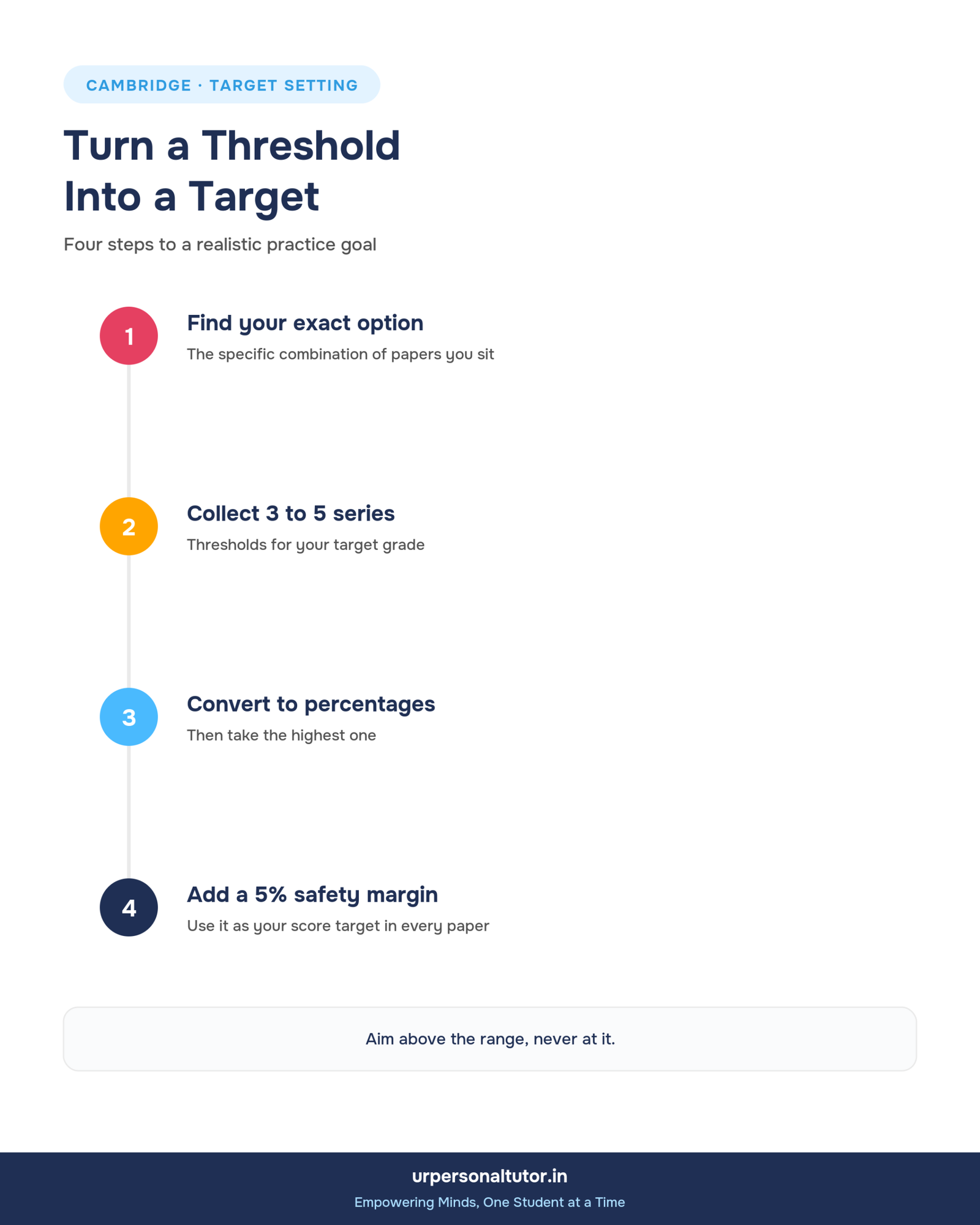
- Collect thresholds for your exact option from the last three to five series.
- Convert each threshold for your target grade into a percentage.
- Take the highest of those percentages, then add a 5 percent safety margin.
- Use that number as your target score in every past paper you sit.
If the A* threshold ranged from 72 to 78 percent, aim for around 83 percent in practice. That margin protects you from a nervous day or an unusually easy paper with high thresholds.
Using Thresholds Wisely
Thresholds reduce anxiety when used well. Students who believe they need full marks for an A often panic over a single difficult question. Seeing that the A typically needed around three-quarters of the marks helps them stay calm and move on.
But thresholds can also cause complacency. “I only need 65 percent” is a dangerous mindset when that year’s paper is easier and the threshold rises. Always aim above the range, not at it.
Frequently Asked Questions
What are grade thresholds?
Grade thresholds are the minimum marks needed for each grade in a particular exam series. Cambridge publishes them after results so candidates can see how raw marks map to grades.
Why do IGCSE grade thresholds change every year?
Thresholds are adjusted for paper difficulty so that each grade represents a consistent standard. Harder papers usually have lower thresholds and easier papers higher ones.
How many marks do I need for an A* in IGCSE?
It varies by subject, option and series. Check your exact option in recent threshold tables, then target a few percent above the highest A* threshold you find.
What is an option in Cambridge grade thresholds?
An option is the specific combination of papers a candidate sits, such as Paper 2, Paper 4 and Paper 6. Your overall grade is decided by the option threshold, not individual component thresholds.
Where can I find Cambridge grade thresholds?
Cambridge publishes grade threshold documents for each syllabus and exam series on its official website after results are released.
Want help turning your target grade into a practice plan with clear score milestones? Ur Personal Tutor builds personalised IGCSE and A Level revision plans. Get in touch.