
IGCSE online tuition works best when it is built around one subject, one tutor and a weekly rhythm tied to the exam calendar. A student who joins two focused live sessions a week, then spends the days in between attempting past paper questions, usually improves faster than a student who buys a large recorded course and watches it passively. This guide covers what a good setup looks like, which format suits which student, and how to pick a tutor without being swayed by a polished demo.
What IGCSE Online Tuition Actually Involves
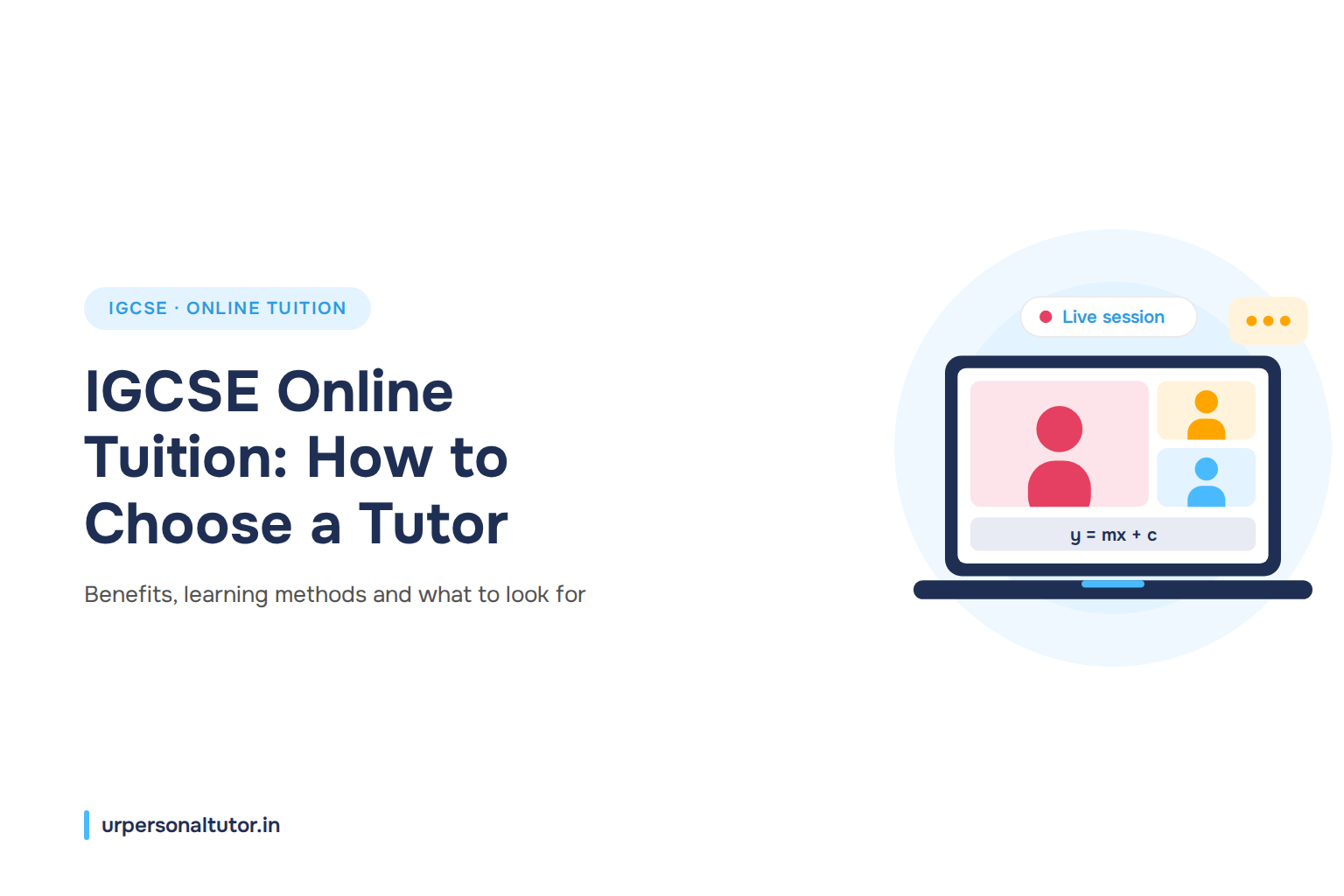
Strip away the marketing and IGCSE online tuition is straightforward. A qualified tutor and a student meet over video, share a digital whiteboard, and work through the Cambridge (CAIE) or Pearson Edexcel syllabus the student’s school follows. The student can interrupt, ask why a step works, and photograph a handwritten answer so the tutor can mark it during the call.
The IGCSE is a two-year course, and most students sit between five and nine subjects. Tutoring rarely covers all of them. Families usually pick the two or three where marks are slipping, with maths and the sciences taking most of the demand.
Benefits of IGCSE Online Tuition for Students and Parents
Time is the first gain. Without a commute, a 60-minute session costs 60 minutes, not 60 plus 40 stuck in traffic. Sessions can sit at 6 pm after school or on a Sunday morning, and they can move when a school test or a sports fixture lands in the same week.
The tutor pool widens too. IGCSE is a niche in many Indian cities, so the number of local tutors who teach Cambridge papers every week is small. Online delivery removes that limit and lets a family choose the best match for the subject and board, wherever the tutor happens to live.
Saved whiteboard pages and recorded sessions give students something a notebook rarely does: the exact three minutes where a tricky idea was explained. A student who forgot how to set up a simultaneous equation can rewatch that clip instead of hunting through old pages.
Who Gains the Most From Online Tuition
Students in large school classes often benefit first, since the tutor can slow down on the one topic they missed without holding anyone up. Students aiming for the top grades gain from sharper feedback on method marks, which is where most of the gap between a grade 7 and a grade 9 sits.
Families who move mid-course see a quieter benefit. A student shifting between cities, or between countries, can keep the same tutor and the same notes through the move, which saves weeks of resettling into a new teacher’s style. Students with a clash between school hours and extracurricular training also tend to do better, because sessions can be slotted around the training calendar.
Learning Methods Used in IGCSE Online Tuition
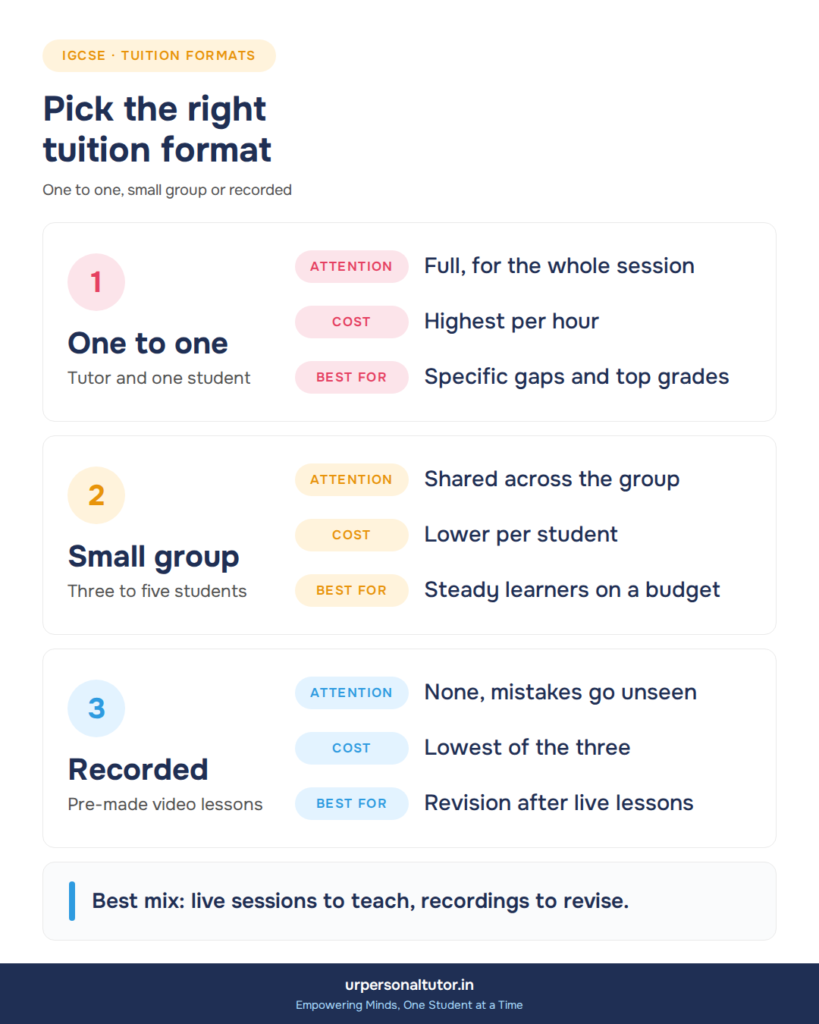
Three formats dominate. One to one sessions give the student the tutor’s full attention, so pace and examples can be tuned in real time. Small groups of three to five students keep IGCSE online tutoring more affordable and add a little healthy competition, though the pace has to suit the middle of the group. Recorded courses are the cheapest and the most flexible, but nobody notices when a student is quietly lost.
The bigger divide is between live online tutoring and pre-recorded lessons. For IGCSE, live wins for most students because the exam rewards method marks, and method errors only show up when someone watches the student work. A recorded video can explain a standard topic well. It cannot tell a student that line three of their working lost two marks.
Strong IGCSE online tuition usually blends the formats: live sessions for teaching and feedback, with saved notes and short recordings for revision.
IGCSE Maths Online Tuition and Other Subject Options
IGCSE maths online tuition is the most requested option because maths marks reward practice volume and quick feedback. Cambridge IGCSE Mathematics (0580) splits students into Core, which sits Papers 1 and 3, and Extended, which sits Papers 2 and 4. Edexcel uses Foundation and Higher tiers instead. A good tutor confirms the tier in the first session, because an Extended student drilling Core questions wastes weeks.
English needs a different rhythm. Families looking for IGCSE English tuition online mostly want line-by-line feedback on directed writing, summaries and essays, and shared documents make that easy since the tutor can comment directly on a draft while the student watches.
The sciences raise a practical question. There is no lab at home, so tutors walk students through the skills behind the Alternative to Practical paper using diagrams, short videos and real data tables from past papers.
IGCSE Online Tuition India: What Families Should Check
Time zones come first if the tutor is based in the UK, since India runs up to five and a half hours ahead. A 5 pm session in London lands at 10:30 pm in Indian winter, so ask where the tutor is based before agreeing to a timetable.
Board is next. Confirm whether the school follows Cambridge or Edexcel and note the exact syllabus code, because question styles and mark schemes differ between the two. Students sitting as private candidates should also confirm their exam centre early, since entry deadlines arrive months before each exam series.
Fees vary widely, so compare what each price includes. Marked homework, past paper practice and regular parent updates are worth paying for. A bare library of recorded videos is not.
How to Choose the Right Tutor for IGCSE Online Tuition
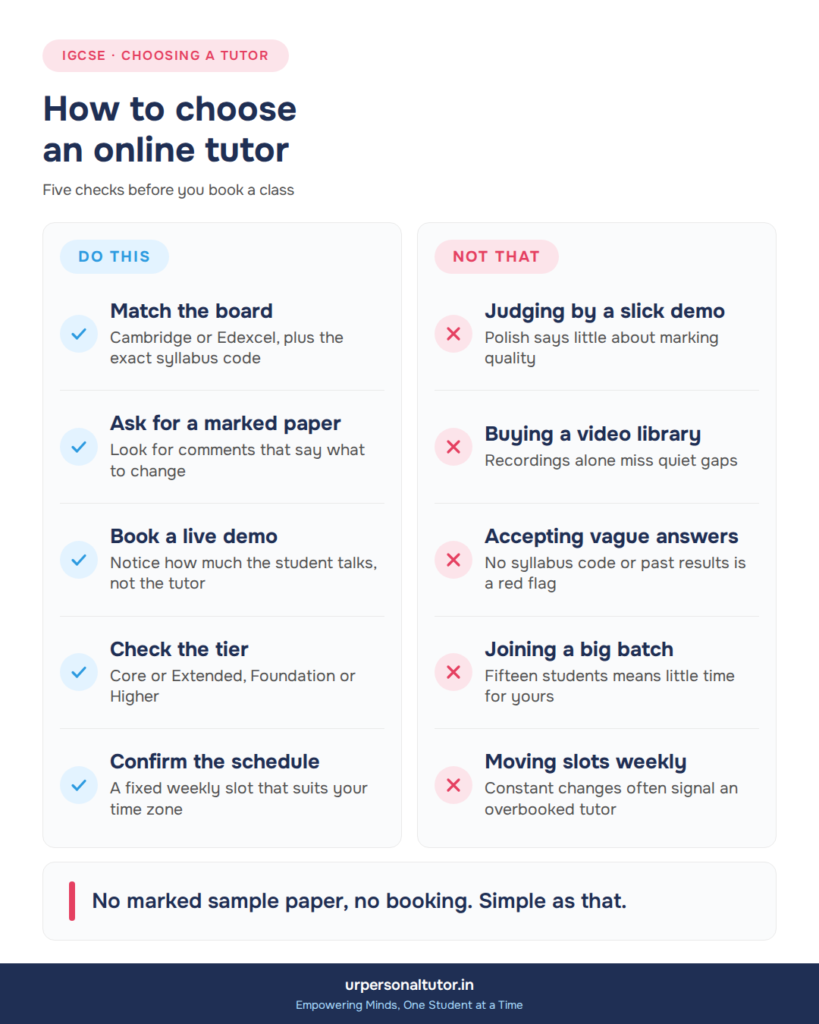
Start with board and subject fit. A tutor who teaches A level maths brilliantly may still be shaky on the Core versus Extended split. Ask which papers they taught last session and how many students sat them.
Ask for a sample next. A good tutor will show you a marked past paper with comments that tell the student what to change, not just ticks and crosses. Then watch a demo class for how often the student speaks. If the tutor does 90 percent of the talking in a trial session, that ratio will not improve later.
Reliability also counts. Sessions that move around every week usually signal a tutor who is overbooked. And if your child’s gaps are specific, an online private tutor will generally move faster than a batch of fifteen, since nobody waits for the slowest or fastest student in the room.
Questions to Ask Before You Book a Demo Class
Any provider of IGCSE online tuition should be able to answer these plainly:
- Which exam board and syllabus code do you teach, and which papers did your last students sit?
- What does a typical session look like, and how much of it is the student working?
- How is homework marked, and how quickly does it come back?
- Will I get a progress update, and how often?
- What happens if a session is missed or the connection drops?
Vague answers to two or more of these are a sign to keep looking.
How to Get the Most Out of IGCSE Online Tuition
The student’s preparation changes results more than the tutor’s slide deck. Arrive with two or three specific questions from the week’s homework, written down. After the session, redo one corrected question without notes within 48 hours. If the student cannot, the explanation did not land and needs another pass.
Parents help most by keeping the setup boring: same time every week, camera on, phone in another room, a printed past paper beside the laptop. In the final term, a calendar matters more than extra hours, which is why a 12-week revision plan gives each session a clear target.
Is IGCSE Online Tuition Worth It?
For most students, yes, provided the setup follows the points above: a matched tutor, live sessions, marked work and a weekly calendar. It is a poor fit only when a student refuses to engage on screen or when the family hopes tuition will replace effort. It will not do the studying for anyone.
If you are weighing options for your child, book a consultation with UrPersonalTutor and we will match a tutor to the board, subject and tier, then build a weekly plan around the exam series you are aiming for.
FAQs
Can tuition replace school classes for IGCSE?
Not for students enrolled in a school, since school provides assessments, coursework and internal practical work. Tuition fills gaps and sharpens exam technique. Homeschooled students can lean on a tutor for most of the teaching, but the family still needs to register with an exam centre.
How many sessions a week does a student usually need?
For one subject, two 60-minute sessions a week during term is a common starting point. A student who is already strong may need only one. In the six weeks before mock exams, many families move to three.
What equipment does a student need for online sessions?
A laptop with a working camera and microphone, stable broadband, and a phone or tablet to photograph written working. A stylus tablet is helpful for maths and physics but not essential.
What if my child loses focus during screen-based lessons?
Shorter sessions of 45 minutes help, as does a tutor who sets a task every ten minutes instead of lecturing. Keep the camera on and ask for a short weekly summary so you can see what was covered.
When is the best time to start?
The start of the two-year course gives the most room to build habits. That said, a student a few months from the exam can still gain a lot if sessions focus on weak topics and timed past papers rather than re-teaching everything.