

Every parent I meet wants to help their child through board exams or JEE and NEET preparation. Very few want to add pressure. Yet in many homes, pressure builds anyway, not through anything dramatic but through small daily habits: a question at dinner, a comparison with a cousin, a sigh at a test score.
As a tutor, I see both sides. I see what students tell me privately, and I see what parents are worried about. The gap between the two is usually smaller than it looks, and it can be closed with a few changes.
What Students Actually Need From Parents
When I ask students what helps most at home, their answers are surprisingly simple:
- A calm, predictable routine
- Not being asked “how much did you study?” every evening
- Someone who listens when a test goes badly, without immediate advice
- Good food, quiet space and permission to rest
Notice what is missing: lectures, comparisons, and constant monitoring. Students already feel the stakes. They do not need reminders.
Build the Environment, Not the Timetable
The most powerful thing a parent can do is shape the environment. Make sure there is a quiet place to study, a fixed time for meals, and a household rhythm that supports early nights. Help keep phones out of study rooms by agreeing on a family rule, rather than policing one child.
Leave the detailed study plan to your child and their teachers or tutor. When parents micromanage the timetable, students often comply on paper and disengage in practice.
Ask Better Questions
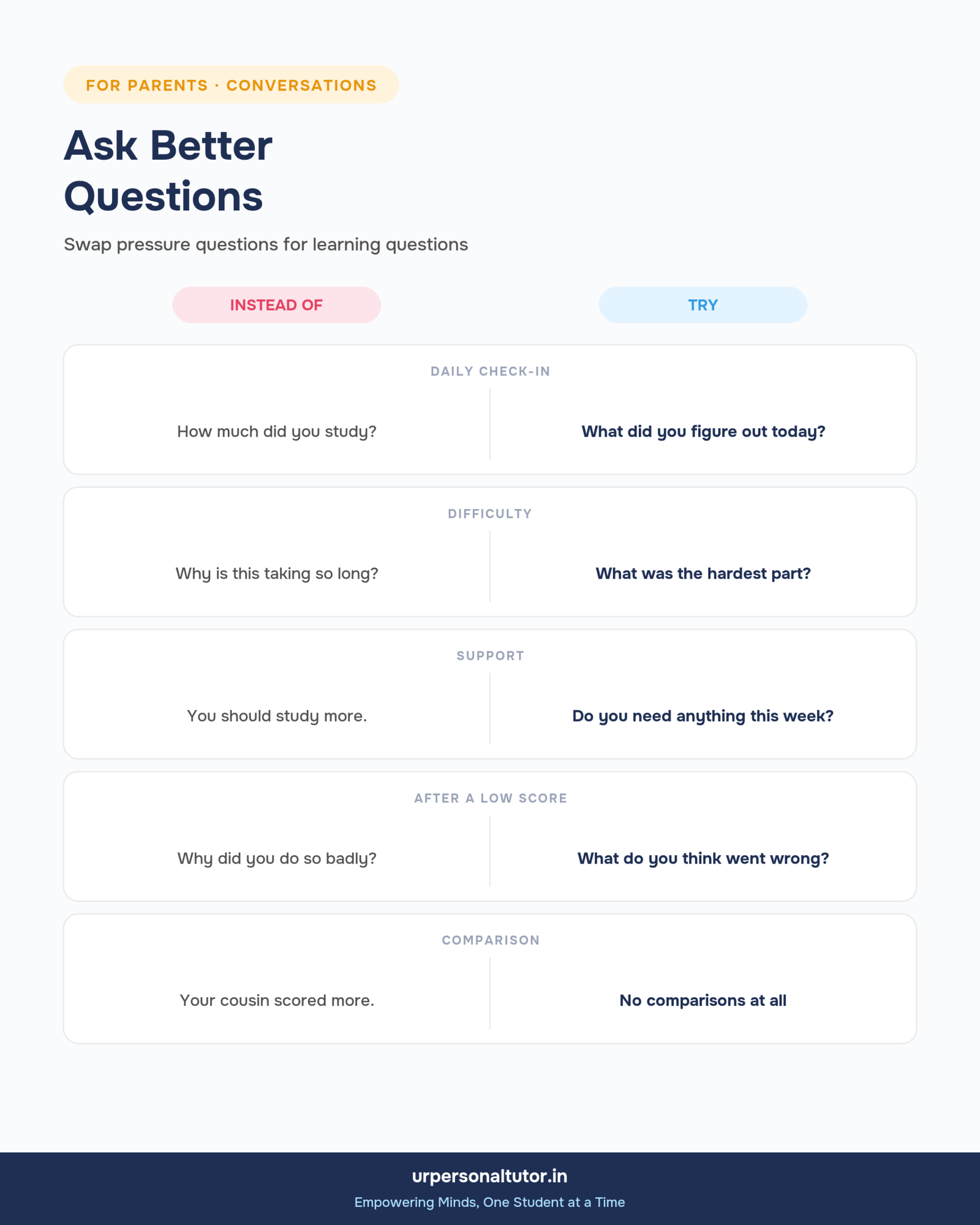
“How much did you study today?” invites an inflated number or a defensive answer. Try these instead:
- “What did you figure out today?”
- “What was the hardest thing you worked on?”
- “Is there anything you need from me this week?”
These questions open conversations about learning instead of hours. They also tell you far more about how preparation is really going.
How to Respond to a Low Score
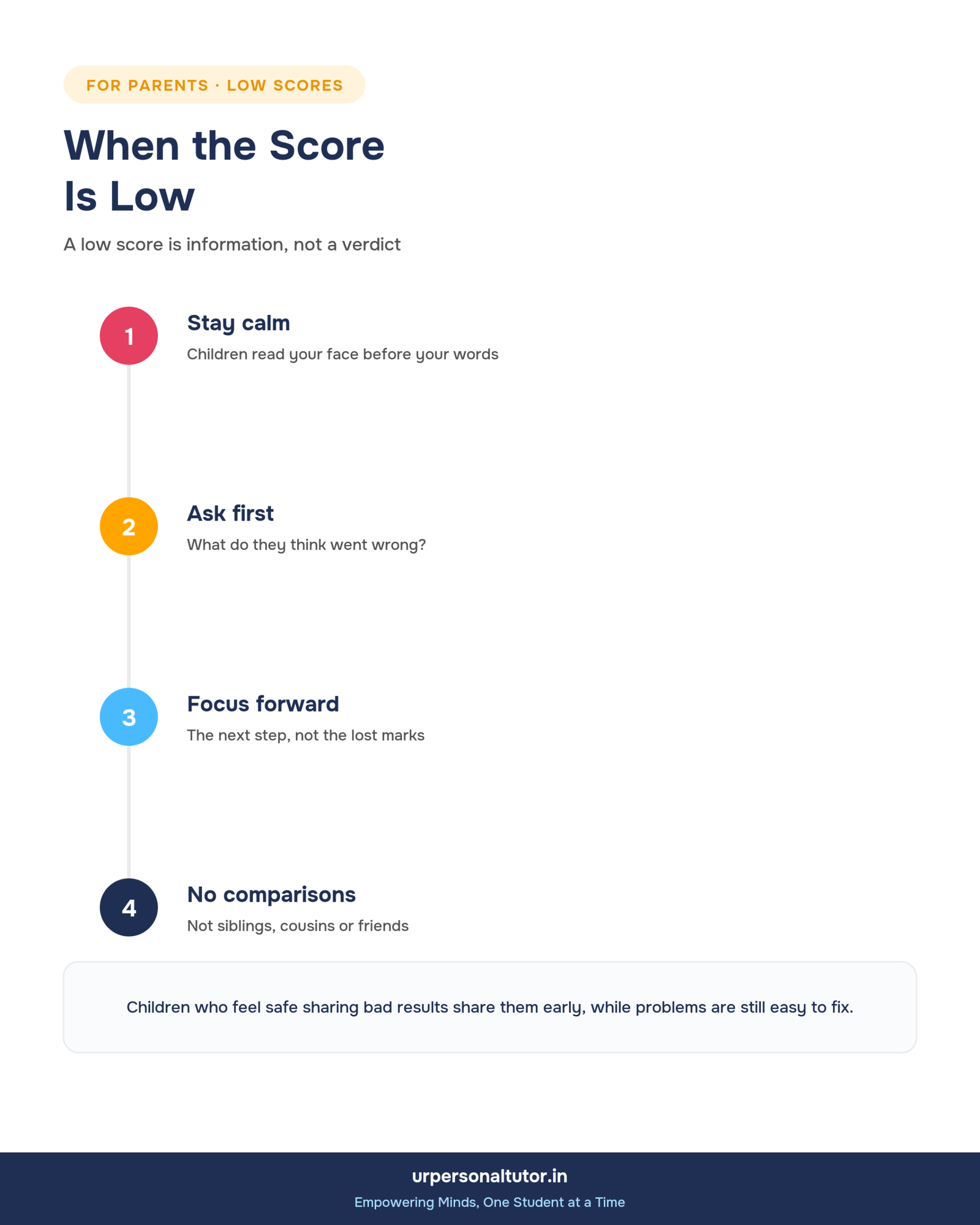
This moment matters more than any other. A low mock or unit test score is information, not a verdict. When your child shares a disappointing result:
- Stay calm in your face and voice. Children read reactions instantly.
- Ask what they think went wrong before offering your view.
- Focus on the next step, not the lost marks.
- Avoid comparisons with siblings, cousins or friends’ children entirely.
Students who feel safe sharing bad results share them early, when problems are still easy to fix. Students who fear the reaction hide them until it is too late.
Signs Your Child Needs Extra Support
Pay attention to changes in sleep, appetite, mood or withdrawal from family and friends. Persistent anxiety, frequent headaches before tests, or statements like “there’s no point” are signals to slow down and talk. If worry seems persistent or overwhelming, consider speaking with a school counsellor or mental health professional. Academic support can also help, because a lot of exam stress comes from specific weak areas that a good teacher or tutor can fix.
Take Care of Yourself Too
Parents carry their own anxiety during these years, and children notice it. Talk to other parents, your partner or a friend rather than letting worry leak into every conversation with your child. Your calm is one of the most valuable things you can give them.
Frequently Asked Questions
How can parents reduce exam stress for their children?
Keep a calm routine, avoid comparisons, ask about learning rather than hours, respond calmly to low scores, and make sure your child gets enough sleep, food and rest.
Should parents make their child’s study timetable?
It usually works better when the student builds the timetable with a teacher or tutor. Parents help most by creating a supportive environment and routine.
What should I say when my child scores low in a mock test?
Stay calm, ask what they think went wrong, and focus on the next step. Avoid comparisons and treat the score as feedback rather than a judgement.
How do I know if my child needs a tutor?
If your child is stuck at the same scores for months, avoids particular subjects or chapters, or struggles to clear doubts quickly, targeted one-to-one support can help.
How much should parents be involved in JEE or NEET preparation?
Be involved in support, not supervision. Provide structure, resources and encouragement, and leave daily academic decisions to your child and their teachers.
Ur Personal Tutor works with families, not just students, keeping parents informed without adding pressure at home. Reach out to talk about your child’s preparation.